


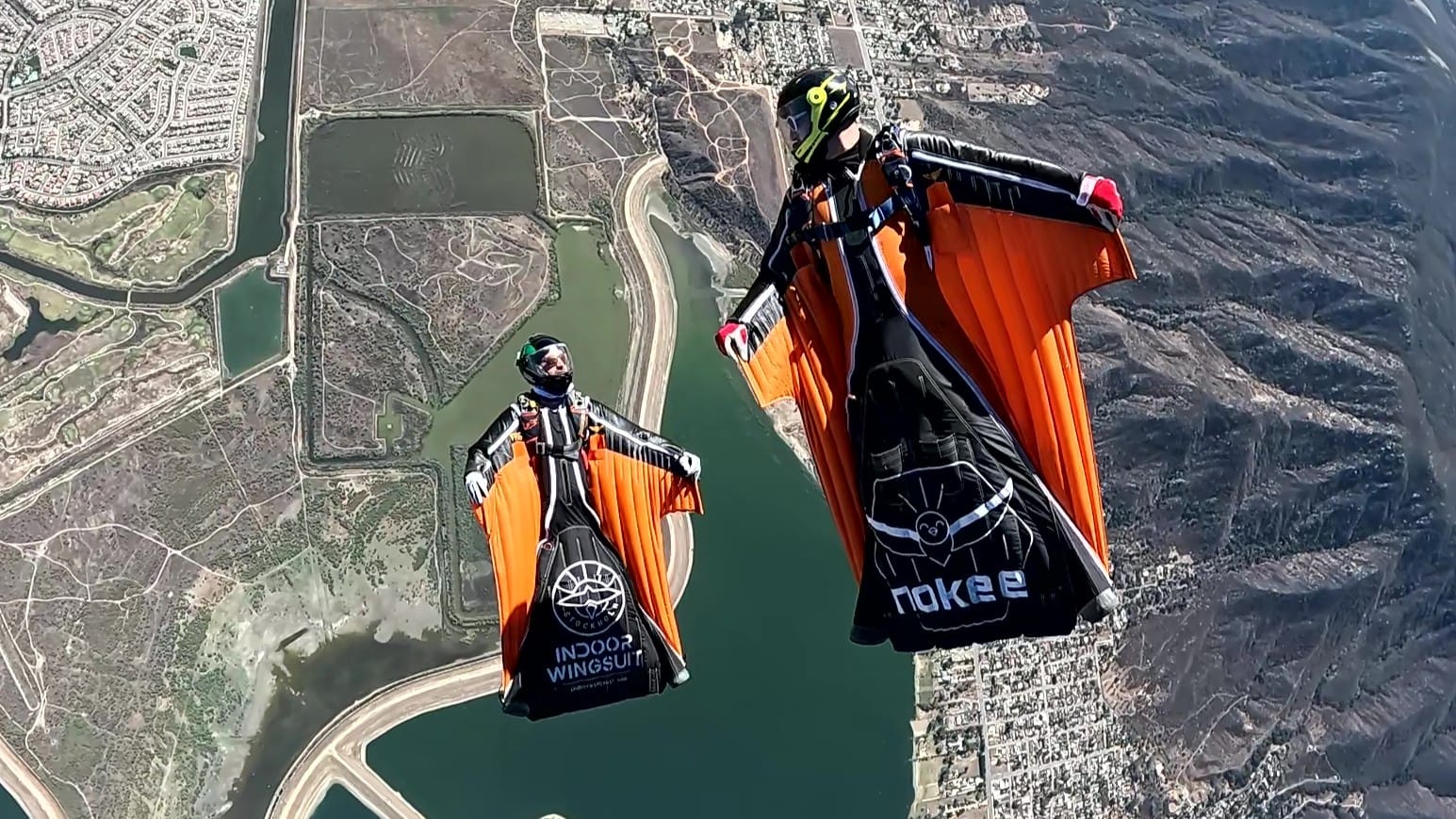
Team Canada is flying high after bringing home bronze from the 2026 World Parachuting Championships in Lake Elsinore, California.
Team Cyclone locked in Canada’s first medal in four-way canopy formation rotations since 1994.
Jumper Bradley Meyer also set two Canadian time records in wingsuit performance.
The team is led by Belleville’s Lee Bibby.
You can read the full release below:
The 2026 FAI World Parachuting Championships in Wingsuit and Canopy Formation brought together elite skydivers from around the world for a week of high-level competition, international collaboration, and unforgettable experiences. Held October 8–14 at Skydive Lake Elsinore, California, the championships challenged athletes with extreme heat, changing weather conditions, and demanding competition schedules. Team Canada returned home with a bronze medal, new Canadian records, and valuable experience on the international stage.
Representing Canada were athletes competing in canopy formation, wingsuit performance, and wingsuit acrobatics. The Canadian Sport Parachuting Association (CSPA) was led by Head of Delegation Lee Bibby from Belleville.
A Historic Medal for Canada
One of the highlights of the championships was Team Cyclone’s bronze medal in four-way canopy formation rotations. The team consisted of Vincent Coulombe, Jean De Ladurantaye, Simon Coulombe, Martin Dumas, and camera flyer Cecile Duval.
The achievement was particularly significant, marking Canada’s first medal in the rotations discipline since 1994. It was a proud moment for the athletes and a testament to the dedication, preparation, and teamwork required to compete at the world level.
Canadian athletes also achieved notable results in wingsuit disciplines. Bradley Meyer recorded two wingsuit performance records longest time of 98.1and 103.1 seconds, while Team Just in Beavers, consisting of Philippe Boisjoli, Daniel Lacasse, and camera flyer Simon Gélinas, achieved a notable 4th place result in wingsuit acrobatics. Canadian and North American FAI record achievements were also set during the event by Canadians.
Competing Against the Elements
The competition presented significant logistical and environmental challenges. Temperatures reached 38°C during practice days and 34°C on the first day of competition. While mornings were relatively calm, winds became more challenging later in the day. One Canadian athlete suffered a broken ankle while landing in gusty winds.
Hurricane-related weather conditions subsequently suspended jumping for approximately two and a half days. Organizers adjusted the schedule to accommodate the conditions, including advancing the two-way sequential event. Competition resumed on October 13, with four-way rotations beginning that day.
Despite these disruptions, the Meet Director did an excellent job prioritizing participant safety while keeping the competition moving whenever conditions allowed.
Looking Ahead
Discussions at the FAI meetings also focused on the future of the sport. Canopy formation representatives considered rule changes to better accommodate teams when an athlete is injured. Wingsuit performance discussions explored ways to reduce airspace requirements and the associated costs to drop zones. In wingsuit acrobatics, participants identified the need for a more comprehensive review of the rules, particularly to improve clarity and consistency in freestyle judging.
The event also highlighted opportunities to improve support for future Canadian delegations. Clear communication channels between the Head of Delegation, Chief Judge, Meet Director, and organizing committee would help ensure timely access to information.
A Privilege to Represent Canada
For the athletes, the championships were an opportunity to test their skills against the world’s best. For the delegation, they were also a reminder that international sport is about much more than medals and records. It is about resilience, teamwork, mutual support, and representing one’s country with pride.
Despite the challenges posed by weather, logistics, and communication, Team Canada demonstrated commitment and professionalism throughout the event. The bronze medal in canopy formation rotations and the achievements in wingsuit disciplines provided reasons to celebrate, while the lessons learned will help strengthen future Canadian delegations.
Spending time with each athlete and learning more about disciplines with which I had less experience was a privilege. I am grateful to CSPA for the opportunity to represent Canada and support our athletes at the World Championships.
Congratulations to all the Canadian athletes who represented their country in Lake Elsinore. Their achievements, sportsmanship, and support for one another made this a memorable championship for Team Canada.
