



Given the fact that the Quinte region has received much more snow than usual in recent weeks and has shivered through periods of prolonged cold, Quinte News thought it appropriate to ask Quinte Conservation about flooding prospects for its watershed as spring approaches.
Below is an answer from Water Resources Manager Christine Phillibert.
Quinte Conservation is monitoring current and projected conditions that may influence this spring’s freshet. The spring freshet is the peak river flow that occurs in the spring (usually in late March or April). Once the spring freshet has started, there is the potential for flooding within the watershed and along its rivers and creeks. Certain conditions are required for flooding to be possible, or more likely, but are not a definitive predictor of occurrence.
The snow cover in the Quinte watershed is currently holding 140-240% of the normal water content for this time of year. There is also significant ice coverage on the watershed’s lakes and streams. These conditions present potential risks for flooding when the snow melts. Water Resources staff forecast floods using meteorologic conditions (rainfall and temperature), snow coverage & ground conditions, and river and stream flow. Long-term meteorologic forecasts are not sufficiently accurate in predicting whether the rivers and streams will flood. As we get closer to spring, and we see above freezing temperatures in the forecast, our flood forecast accuracy improves.
Sustained high temperatures and rainfall would likely produce flood conditions, where as, weather conditions with daytime highs above zero, freezing temperatures overnight and without rain – is unlikely to cause flooding. A fast melt can also cause ice to break up, mobilize, and jam which can cause additional flood concerns.
The long-term weather forecast is predicting more precipitation than normal and below seasonal temperatures into mid-spring. If this holds true, there is a higher potential for flooding. Ultimately, if there is a flood or not will depend on how the snow melts.
Although there is currently no imminent flood concern, residents can still take steps to be prepared. Move belongings in basements that could be damaged by water off of the floor and to an elevated location, test sump pumps and back-up power supplies, and plan for someone to check on your home if you are out of town. Additionally, residents are encouraged to review Quinte Conservation’s flood information and sandbagging guide at QuinteConservation.ca and check with their municipality for emergency preparedness information.
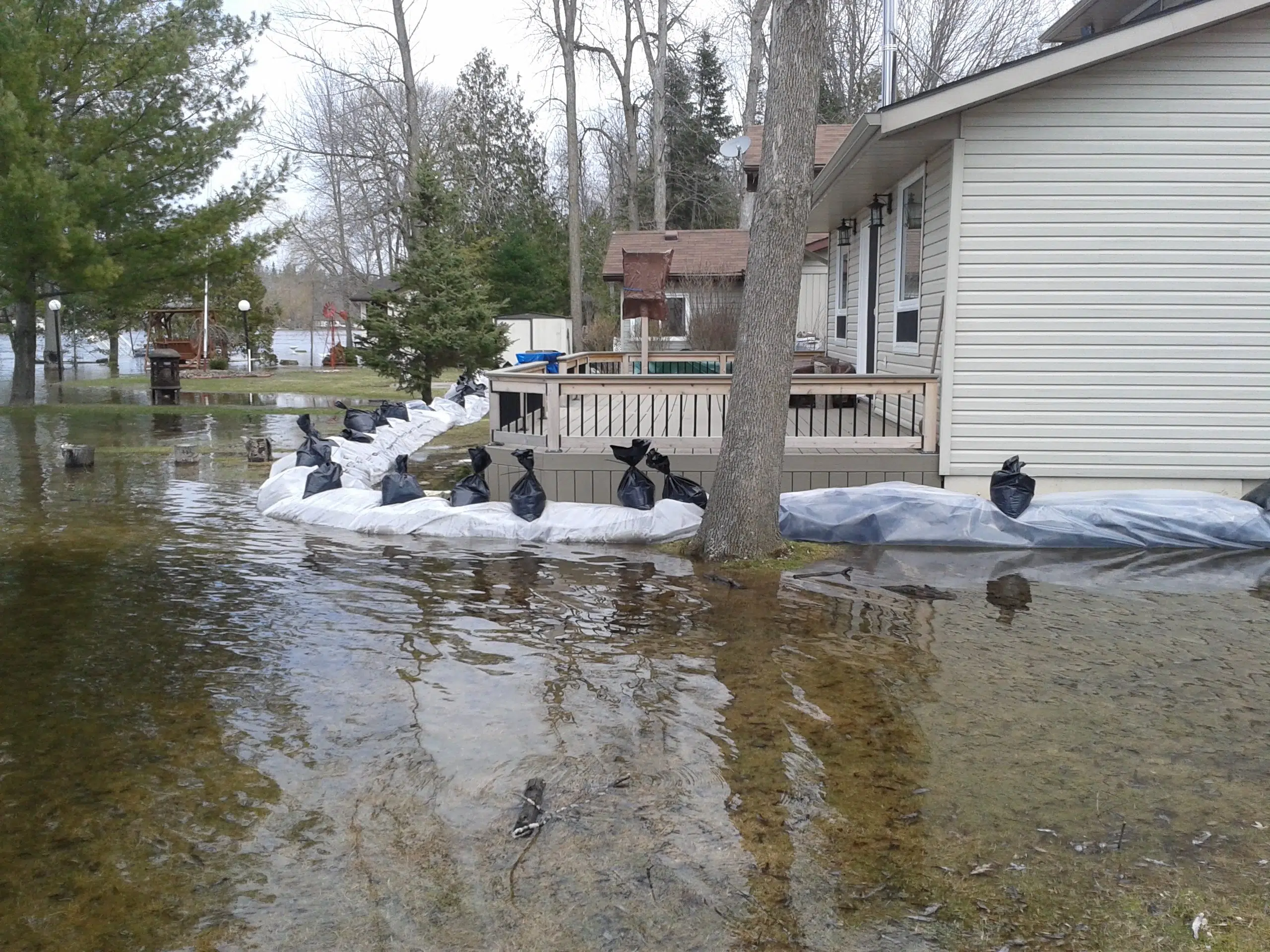
Significant flooding event (2014) in the Lower Trent watershed region.
