



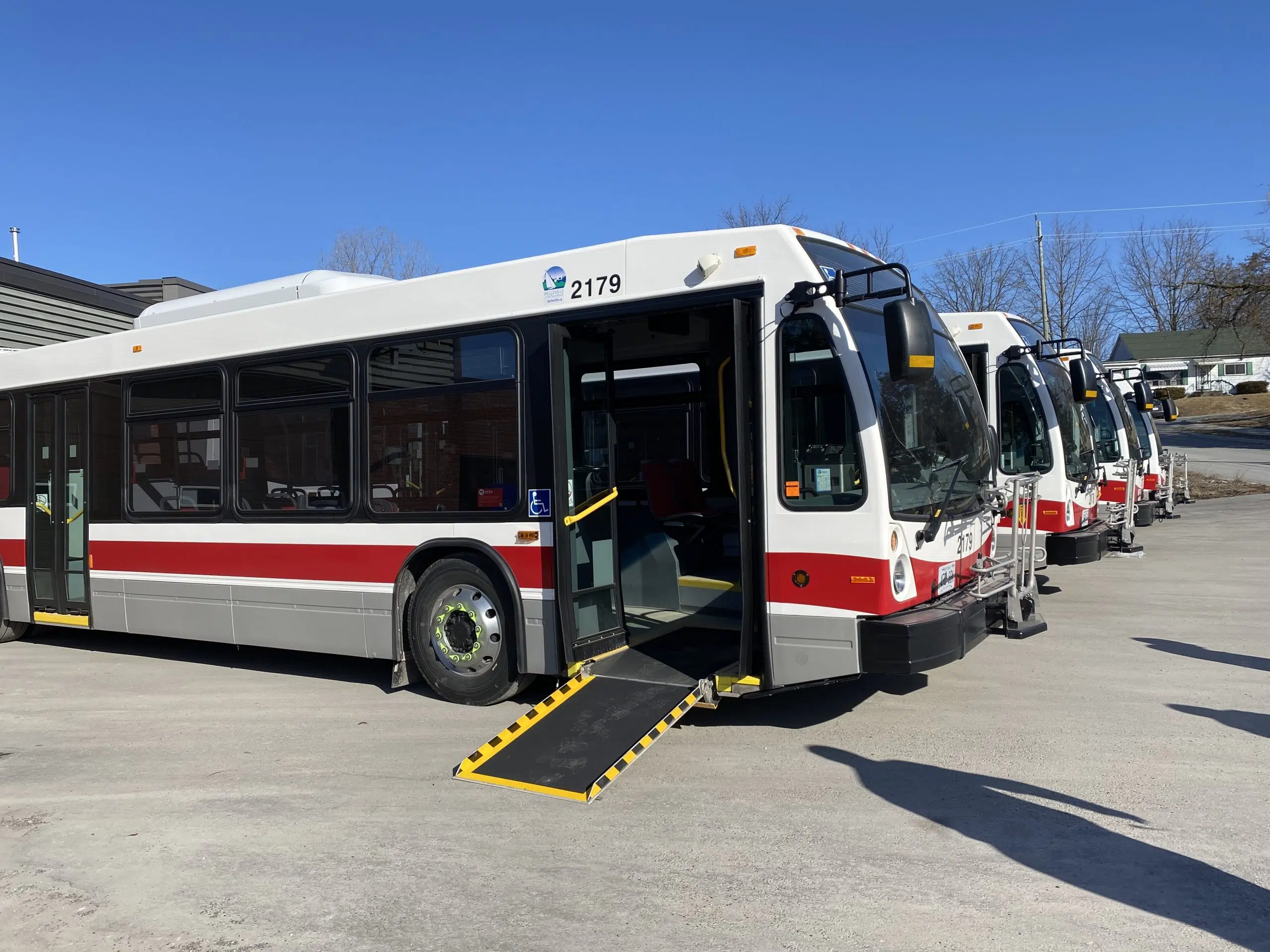
“Parts to repair and maintain them (buses) are all coming up out of the States. That’s the only place that they’re manufactured. So on conventional transit we’re paying 10% and on our mobility transit for vehicle parts we’re paying 25% tariffs.”
But it’s not only Trump’s tariffs that are causing the system financial issues. The federal government recently put a cap on the number of international students permitted to attend post-secondary institutions, such as Loyalist College in Belleville.
“The reduced number of international students going to Loyalist College is having a huge impact on transit and on Loyalist College itself.”
In October the ridership on conventional public transit buses was 103,487, down by 66,651 rides from October of 2024, before the federal government changed its policy.
Because of the ridership issue, Belleville Transit has dropped one of its express buses running to the college and instead will double up service on the busy north-south Sidney and North Front street routes.
Brown tells Quinte News that between the ridership drop and tariffs, staff and committee considered two options, one being reducing the levels of service to cut costs, or upping the fares to boost the numbers on the revenue side.
The committee agreed with staff that increasing the fares was best.
“There’s no public transit system anywhere that can exist on riders’ fares alone, they’re all subsidized. Our goal is to have the cost shared 35% by riders and 65% from general taxation. With the effects of the tariffs and ridership drop, fares were only bringing in around 25% of the system’s cost. This increase brings us to around 30% from riders, closer to our goal. We didn’t want to put more of the cost onto the tax bill,” said Brown.
Belleville Transit is planning a comprehensive campaign to inform the public about the changes, which are to take effect on January 1.
